
Some are brand new rules, some are old rules that are now being enforced. And one of them is good news. Let’s be honest, you may have broken at least one of these without realizing it. The point is not to scare you – the point is to keep the airport from teaching you the lesson in the worst possible way.
Note that these rules are for U.S. flyers, but it you are flying internationally into the U.S. these rules also apply to you! The first rule – Power Banks applies to everyone, regardless of country or destination.
If you want your next airport day to feel calmer, faster and less confusing, make sure you follow these simple rules.
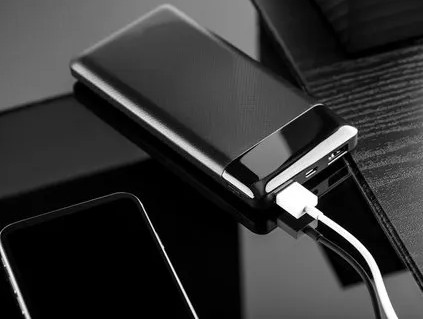
Number 7. Power Banks
Do you carry a power bank with you when you travel? They are handy when you need to re-charge your phone before it dies completely. We’ve always tossed our into our carry on without even thinking about it… but now things have changed and everyone has to be aware of the power bank that’ll travel with you and the one you’re going to leave at home. It took effect around the world in March of 2026, and on January 1st, 2027 it goes into the standard rulebook that all airlines everywhere must follow.
Have a look at yours. Read the numbers on your power bank / phone charger. Printed somewhere in very small letters is how much energy it holds in watt-hours. 100 watt hours or less is the line you can’t cross. Some packs don’t show watt-hours. They show a bigger number followed by the letters M-A-H – if that number is 26,000 or less, you’re fine.
If the print has rubbed off and nobody can read it, the airline can say no, so if you can’t read it, replace it or leave it at home. A new one only costs about $20, so you don’t want to be losing yours at the airport while you’ve got a dead phone in a strange city.
Power Banks Part 2 – How many is too many?
For years nobody counted and people flew with three or four of them. Not any more – two is the limit going forward. Since March 27th of 2026, the international standard is now a maximum of two power banks per person.
It comes from the United Nations agency that sets flying rules for 193 countries, so on any overseas trips – two is your number.
However… let’s complicate flying even more!! Inside the United States, each airline sets its own number. But wait… there’s more…. Southwest allows only one (since April of 2026)
So why are they now enforcing this?
Because these batteries can catch fire. The FAA counted 97 battery fire and overheating events on planes in 2025. China has been clamping down on power banks for several years now – they reacted quickly to the dangers.
Power Banks Part 3 – Keep Them With You
Another wrinkle – it’s not only how many you carry, it’s where you put them as well. Your charger(s) can no longer ride in the overhead bin. Here’s the old habit we’ve all done – you don’t need it on the plane, so the charger goes in the outside pocket of your roller bag and the bag goes up in the bin. The problem is: if a battery overheats up there, nobody sees it until there’s smoke – or fire. At your feet, you’ll notice in seconds and so does the crew.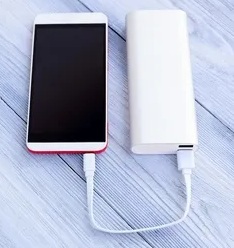
Two more things come with the new standard.
1) You can’t plug a power bank into the seat outlet to refill it during the flight and
2) It never goes in a checked suitcase – that part isn’t new, but it still catches people every day.
What about using it to charge your phone while in the air? That depends on the airline. Some allow it if the battery stays out in plain sight. Some don’t allow it at all. So, ask the crew.
That works when your bag stays with you, but on a full flight, it may not – they may take your bag away from you (happened to us once NOT cool). If they take your bag at the gate, the batteries come out. So if you hear the announcement that the overhead bins are full – grab your power bank!
The second they grab your bag, your carry-on is now a checked bag, and checked bag rules apply. The FAA says spare lithium batteries and power banks must come out and stay with you in the cabin. It’s the same for a suitcase with a built-in charger. That battery has to pop out, and it stays with you. And while your hand is in the bag, take your medicine, your keys, your glasses and your mp3 player etc. too. Pack for that moment – keep your batteries and your must-haves together in one small pouch, right at the top of your carry-on.
Related…
20 Proven Tips To Survive And Thrive During A Long Flight In Economy
Our 12 Ultimate Hacks That Will Make Flying In Economy More Comfortable
Number 6. Carry On Bag
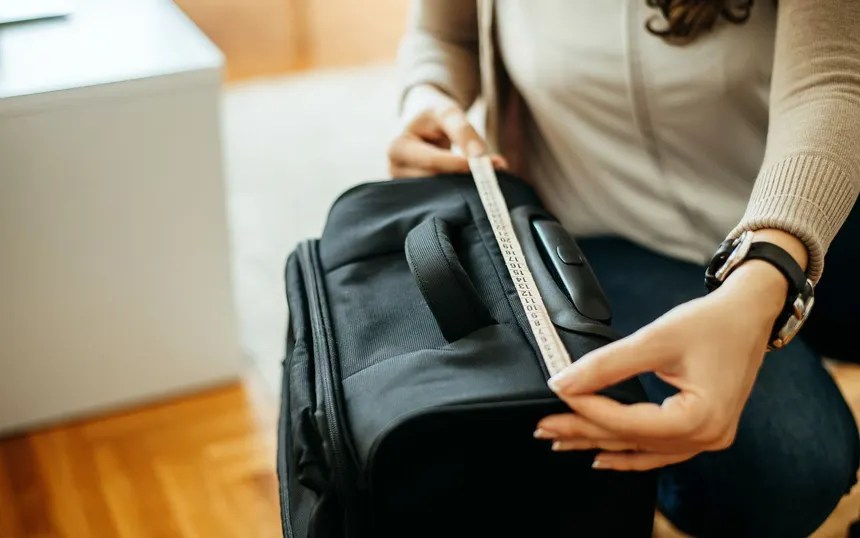
Size Matters. Your small bag that sits at your feet, tucked under the seat in front of you. You’ve probably never measured it (we check with the airlines’ website every trip just in case there has been any ‘updates’ since our last adventure). But it’s the one thing that’s getting travellers stopped at the gate now because of the way airlines check its size has now changed. Most people measure the suitcase body, but airlines measure the whole bag.
For years we’ve had a metal frame next to the gate – if your bag fit inside, you were fine. If it didn’t, you now had to check it along with way too much money for the privilege. American and United Airlines have moved those frames away from the gates, and they’re back in the check-in hall.
In the past, at the gate, the agent decides by looking – that sounds easier. It isn’t. Because now you don’t find out your bag is too big until you’re at the door of the plane – then it’s a checked bag fee (about $35 to $45 on a flight inside the country) – and your bag goes into the bowels of the plane.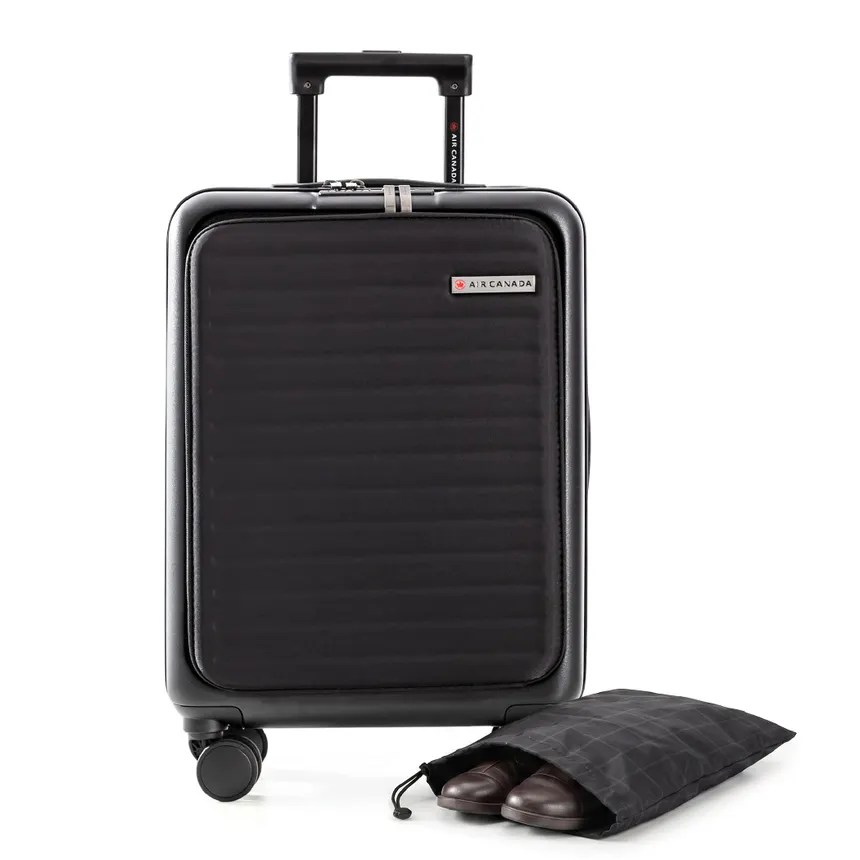
The numbers themselves have not changed. American, Delta and United allow a carry-on that can be 22 inches tall, 14 wide and 9 deep – including the wheels and the handle. Southwest allows a little more, 24 by 16 by 10 but it also says wheels, handles and attachments count toward those dimensions.
So, measure at home. Pack the bag full first. Stand it up the way it will stand at the airport. Measure from the floor to the top of the handle – if the front pocket is stuffed, that counts too. United says all carry-on bags must fit in the overhead bin.
Also, note that if you’re flying overseas, many foreign airlines weigh the carry-ons as well – Frankfurt does this regardless which airline you are using. The limit is usually between 15 and 22 pounds.
Carry On Bag Part 2 – Under The Seat Or Bin It
The biggest carry-on mistake is putting the most important items in the bag most likely to leave you. This is terrifying when it happens and you are not prepared for it. This happens every day: a traveller packs beautifully. Medicine is in the roller bag. Passport is in the inside/outside pocket. Phone charger/power bank in the side pouch, glasses case tucked near the laptop, house keys in the zippered compartment. Then the gate agent checks the bag, or the overhead bin fills up and the stewardess grabs your bag and tells you you’ll get it back when you land!!
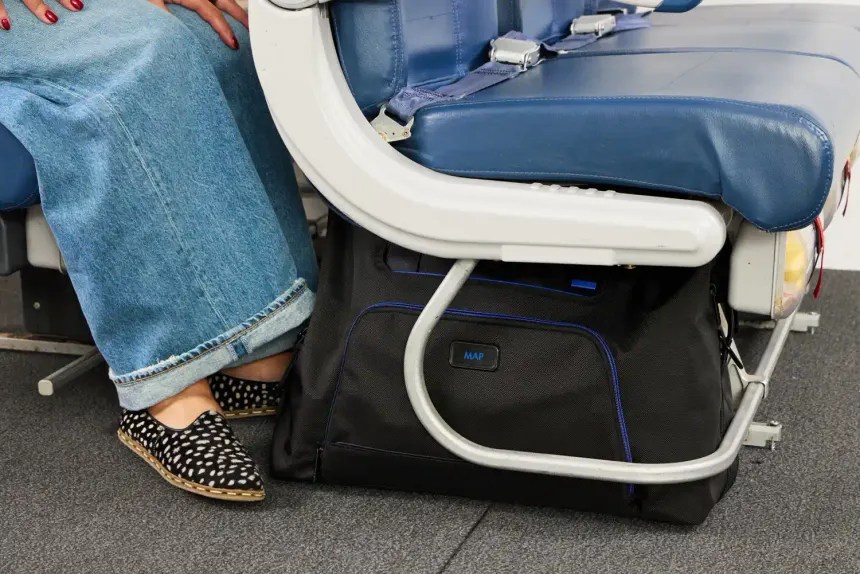
If losing it would ruin your day, it belongs under the seat. Medicine, glasses, hearing aid charger, phone, wallet, passport, keys, power bank, boarding documents, emergency contact card, important prescriptions. Those items do not belong in the roller bag that might be taken at the gate/door. They belong in the small personal item that stays with you. Put those essentials into the under seat bag first. Pack the roller bag with replaceable items. Clothes, shoes, non-essential toiletries, and things you can live without for a few hours. Before you zip the carry-on, ask one final question. If the airline takes this bag at the gate, what would I panic about? Whatever answers that question goes under the seat – in your “Personal Item.”
Looking for travel product recommendations from TravelBloggers?
Click this link… https://link.amazon/A0644K4pf Whether you’re travelling by air or road, we’ve got you! ♥
Number 5. Personal Item
The suitcase is the bag everyone worries about, but it’s not the bag that’s catching people now (in addition to the carry-on). Airlines call it your “personal item.”
Your personal item is the purse, the tote, or the small backpack that goes under the seat in front of you. Most people have never measured it, and over the years, it has grown. We’ve seen people with 3 “personal items” almost as big as their suitcase get on a plane and struggle to their seat!!! Finally the airlines are stomping down on these types of people.
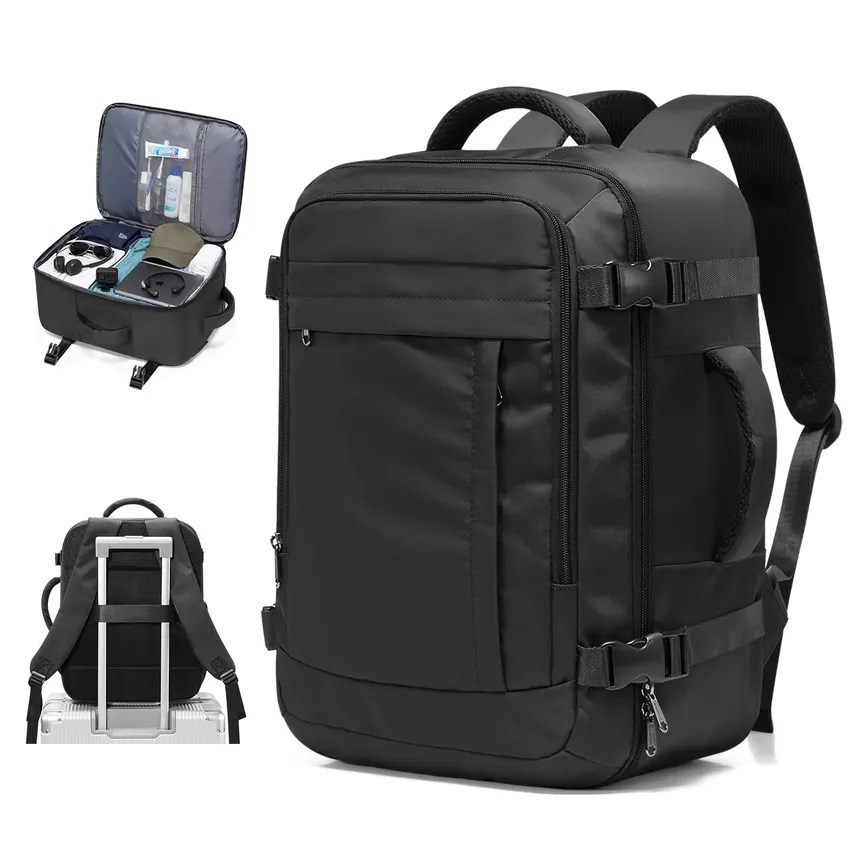 We’ve all seen them: A big tote, plus a shopping bag, plus a neck pillow and a jacket tied to the strap with or without their Duty Free stuff. Airlines have numbers for “personal items.” Low-cost airlines like Spirit and Frontier, that small bag is the only one included in your ticket. Depending on how cheap you are – even that isn’t included on WestJet planes!
American Airlines says 18 inches by 14 by 8. United Airlines says 17 by 10 by 9. While others just say it has to fit under the seat. Anything bigger costs extra, and it costs the most while you’re at the gate. And it’s one personal item. A purse and a tote bag are two. On a full flight, the agents count.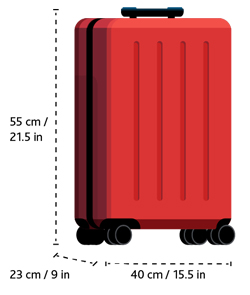
Air Canada give you a TOTAL number of inches/cm size which is great because it allows for numerous variation of sizes to your carry on and personal items.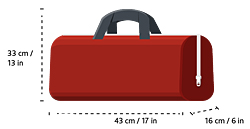
Before you get to the gate, put your purse inside your tote, put the shopping bag inside too. And here’s why this one matters so much. That small bag is where your power banks are! It’s also where your medicine is, and your papers. It’s the most important bag you carry. Make sure it’s allowed on the plane and stays with you!!
Number 4. Liquids
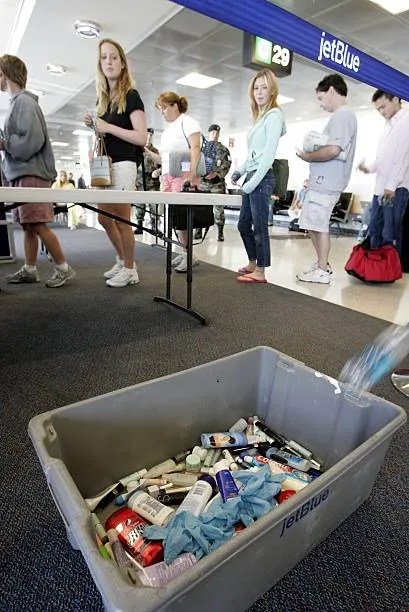
The liquid rule did not disappear just because some airports got better scanners. TSA still says liquids, aerosols, gels, creams, and pastes in carry-on bags must be in containers of 3.4 oz or 100 ml or less and they must fit into 1-Litre (one quart)-sized bag, and each passenger gets one bag.
The part that still catches careful travellers is the container size. A 6-ounce bottle with 1-ounce left inside is still a 6-ounce bottle. That means your favorite lotion, shampoo, hand cream or face wash can be taken from you – even when it is almost empty.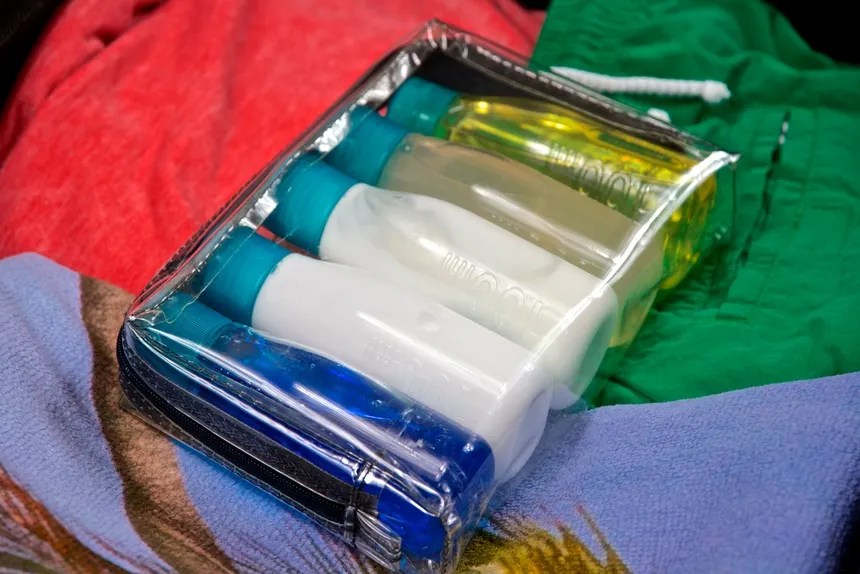
For senior travellers, this matters because many people pack creams, drops, gels, and medical comfort items quickly. Some medically necessary liquids and medicine can be bigger than that, as long as you tell the officer and are properly declared, but ordinary toiletries still have to follow the regular rule. The smart move, put ordinary liquids in travel containers. Keep the 1-L bag near the top of your carry on. If something is medically necessary, separate it and declare it calmly instead of hiding it with regular toiletries. Be safe – check TSA’s own website the week you fly.
Liquids – Part 2
If you can spread it, it’s a liquid. Peanut butter – most people call that food, TSA treats it as a liquid, same for jam, honey, hummus, yogurt, cream cheese, soft cheese, salsa and gravy. An easy way to remember is: If you can spread it, smear it, pour it, or pump it – it follows the liquids rule. Solid food is fine: a sandwich, fruit, crackers, hard cheese, cookies – even a peanut butter sandwich is fine. BUT anything in a jar or a tub goes in your checked suitcase, wrapped up and sealed inside a zip-loc bag.
The hidden food liquid rule is where the airport turns food, into a rule problem. In June 2026 during World Cup travel, TSA reminded travellers that Ranch Dressing counts under carry-on liquid rules. It sounds funny, but sauces and dressings over 3.4 ounces (100 ml) belong in checked baggage. And don’t forget, something as innocent as a snow globe as gifts or souvenir counts as a liquid.
Number 3. Scanner Checkpoints
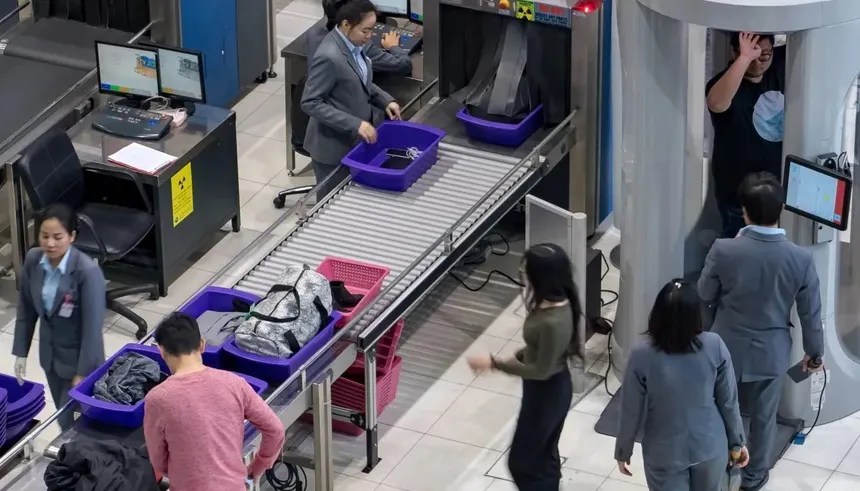
This is the rule that makes travellers argue with officers all the time and is infuriating if you don’t travel on a monthly basis. One airport lane says: “Leave electronics and liquids inside” and another lane says, “Take out your laptop and liquid bag.” Which one is it?! Both… Sometimes.
TSA has been using CT scanners at some checkpoints. These scanners create 3D images of carry-on bags and can allow officers to screen items differently. But every lane does not have the same equipment, and officers still get to decide what must come out at that particular checkpoint.
The big mistake is packing like every airport has the newest scanner. If your liquid bag is at the bottom, now your entire carry-on is open on the tables. For any traveller, that creates the exact stress thieves and careless passengers take advantage of – bins moving, phone in tray, passport exposed, bag half open, and your attention split in four different directions.
The smart move is to pack for both lanes. Keep laptops, tablets, e-readers and the clear liquids bag near the top of your carry on. If the officer says, leave everything inside, you’re fine. If the officer says remove them, you’re ready in seconds. Do not try to predict the scanner. Pack so the scanner cannot get you rattled you.
Scanner Checkpoints Part 2 – Keep Your Shoes On (maybe)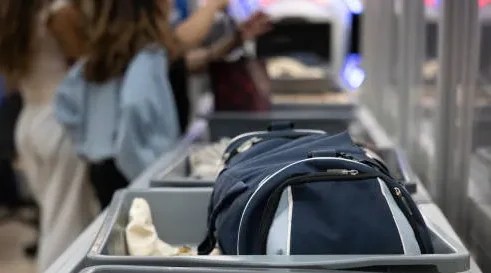
Since July of 2025, your shoes stay on at security – finally the USA catches up with the rest of the world!!! But it’s not all good news. Here’s what catches travellers now. (US) Airports have two kinds of scanners. With the older ones – your laptop and your liquids come out. The newer ones make a full picture of the bag from every side. In many of those lanes, everything stays inside. So you can have two lanes in the same airport with two different sets of rules.
Some people pull everything out from habit in a lane where it should stay in, and others leave everything in, when it had to come out. Then the bag gets pulled aside and they wait – looking like a criminal. So don’t guess. Listen to the officer at the front of your lane. And if you are unsure, ask if anything needs to come out of your bag in this lane. The officer at your lane is the one to follow.
 Number 2. It’s a Rumour, Not A Rule
In September of 2026, news reports said the TSA was thinking about letting pre-check members carry a full water bottle through security at certain airports with the newest scanners. It is not official. And even if it does happen, it would be for water only, for pre-check members only, at some airports only.
Pack for the rules that exist today (or when you travel): Every liquid in a container of 100ml (3.4 oz) or less. All of them in one clear 1-Litre (quart-sized) bag. One bag for each person.
Number 1. TSA Has The Final Say
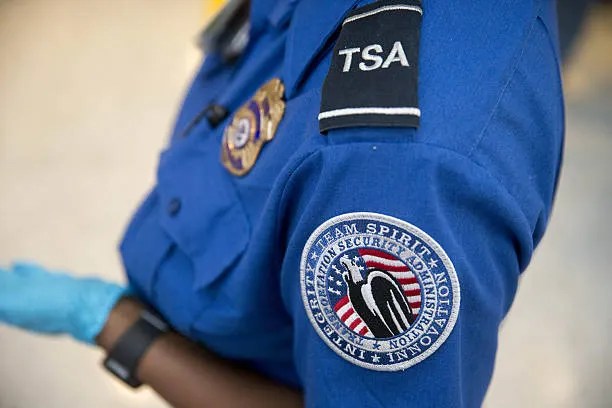
Every rule in this article has the same catch: at the checkpoint, the officer has the final say – it says so on its own website. TSA runs a free service called Ask TSA. You take a picture of the thing you’re not sure about. You send it as a text message to 275-872. And you get an answer. Carry-on, checked bag, or leave it at home.
Ask TSA before you pack. Can I bring this in my carry-on? And attach the photo. There’s also a search box on TSA’s website called What Can I Bring? You type in the item and it tells you where it goes.
Final Thoughts
In all airports travellers that only fly every couple of years are treated like the ones that fly every day – trouble is the infrequent flyers get easily flustered – we experience it often when we haven’t flown for a while. The travellers who lose something at the checkpoint almost always say the same sentence – “But I’ve always packed it this way.” The smart ones who walk right through have asked first. So know the rules before you leave home, not at the airport.
Until next time, fly smart, pack smarter and please do not zip that carry-on until the power bank is in the right bag.

Click this link… https://surfshark.club/friend/kMgzcVbw
** If you make a purchase using our links within this article, we may receive a commission on your purchases – at NO extra cost to you. By making purchases using our links, it helps us defray the costs of running TravelBloggers and keeps any advertisement on the blog to a bare minimum. Thank you for your support! **
Copyright © 2026 TravelBloggers.ca / Iain & Gail Shankland.
All rights reserved.
Text: Iain Shankland | Photography (stock): istock, Getty, Amazon, travelandleisure, adobe
Be sure to give us a like on Facebook or follow us on X
…or sign up for our blog via email so you don’t miss future articles!
X: @TravelBloggerz
FB: @TravelBloggers.ca
YouTube: youtube.com/@TravelBloggers
About TravelBloggers…
Iain & Gail started blogging in order to inspire and motivate people to travel the world from their perspective – specializing in having the most fun while using the least amount of money…travelling on the cheap without sacrificing comfort.
** In the end you will only regret the things you didn’t do **
Discover more from TravelBloggers.ca
Subscribe to get the latest posts sent to your email.

