

There are a few changes for travellers going to the UK and European Union starting today (January 8th). The UK’s ETA expansion is just one example of several new electronic entry programmes being rolled out around the world. Here is a breakdown of the requirements needed, along with the cost – you just know there was going to be a cost – starting with the UK, since they are implementing it first.

Adobe StockPhoto
ETA for the UK:
The ETA, is not a visa and does not replace any existing visa requirements.
The Electronic Travel Authorization (ETA) is now mandatory for non-European visitors to the UK – including US, Canadian and Australian citizens who currently do not need a visa for short stays in the UK. They will be required to obtain an ETA to enter the country. ETA will be required for European citizens starting April 2, 2025.
Travellers planning a trip to the UK will need to register for an online authorization before landing – even if they’re just transiting en-route to their final destination!
To receive an ETA, travellers must fill out an online form and pay a £10 fee (approximately US $12.75). Applicants should hear if their authorization has been approved within a few hours – but in some cases, a decision may take up to three business days.
The authorization is valid for multiple entries to the UK for stays of up to six months for tourism, business, visiting family and friends and short-term study and is good for a two-year period or until the traveller’s passport expires – whichever comes first.
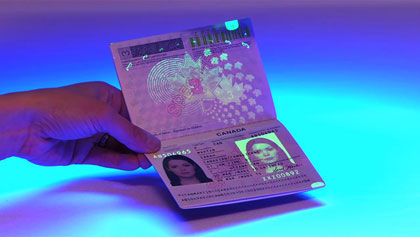
When boarding a plane to the UK, gate agents will verify your ETA status via digital link to your passport thereby reducing time and confusion at border crossings. The biographic, biometric and contact details collected during the application process will also help to increase security by better tracking traveller movements, according to the government.
“Through light-touch screening before people step foot in the UK, we will keep our country safe while ensuring visitors have a smooth travel experience.” Seema Malhotra, UK Minister for Migration and Citizenship, said in a statement.
Exemptions: Certain individuals, such as British and Irish citizens; people who already have a visa or permission to live; work or study in the UK and those traveling with a British overseas territories citizen passport – are exempt from the ETA requirement.
Anyone traveling to the U.K. on or after Jan. 8 can apply through the UK government’s official website here or use the ETA app.
Europe – Schengen Area
 Europe is introducing TWO different, but connected hoops to jump through starting this year.
1. European Travel Information and Authorization System (ETIAS) and
2. Entry/Exit System (EES) – similar to the UK’s ETA. There is no cost for the EES.
The ETIAS has been postponed multiple times, but is expected to take effect in May 2025. The ETIAS requires travellers from visa-exempt nations to secure authorization before entering any Schengen Area country. Travelling foreigners from 60 nations (including the UK, US, Canada and Australia) will have to apply before they are allowed to enter the 30 EU nations. ETIAS doesn’t start until 6 months after EES.
UPDATE March 14, 2025: The European Travel and Authorisation System (ETIAS), has once again been delayed, with officials noting that it will finally launch in late 2026. This time they pinky-swear it’ll happen.. unless they delay it again!
Travelers heading to Europe this year won’t have to worry about when ETIAS will launch and whether they will have to comply with it anymore.
The ETIAS will permit multiple short-term visits, allowing stays of up to 90 days within a 180-day period, and will be valid for three years or until the associated passport expires, whichever comes first. The period of 90 days in any 180 days is calculated as a single period for all the European countries using the EES.
You can leave and return as many times as you wish, as long as you respect the overall limit of your authorized stay
The EU is also poised to launch a separate digital monitoring initiative called the Entry/Exit System (EES), which uses face and fingerprint scans instead of passports to identify non-EU nationals. Unlike the ETIAS, this new security measure doesn’t require travellers to apply for anything before they start their trip. Instead, travellers will be registered upon entering any of the EU nations using the system.
The goal of the EES is to modernize border crossings and speed up the long immigration lines that have surged with the post-pandemic travel demand. Like other digital entry systems that have been in place for years around the world – such as in the US, Canada, and Australia. The new system is also aimed at combatting identity fraud and the number of people overstaying in the EU… sure, we’ll buy that.
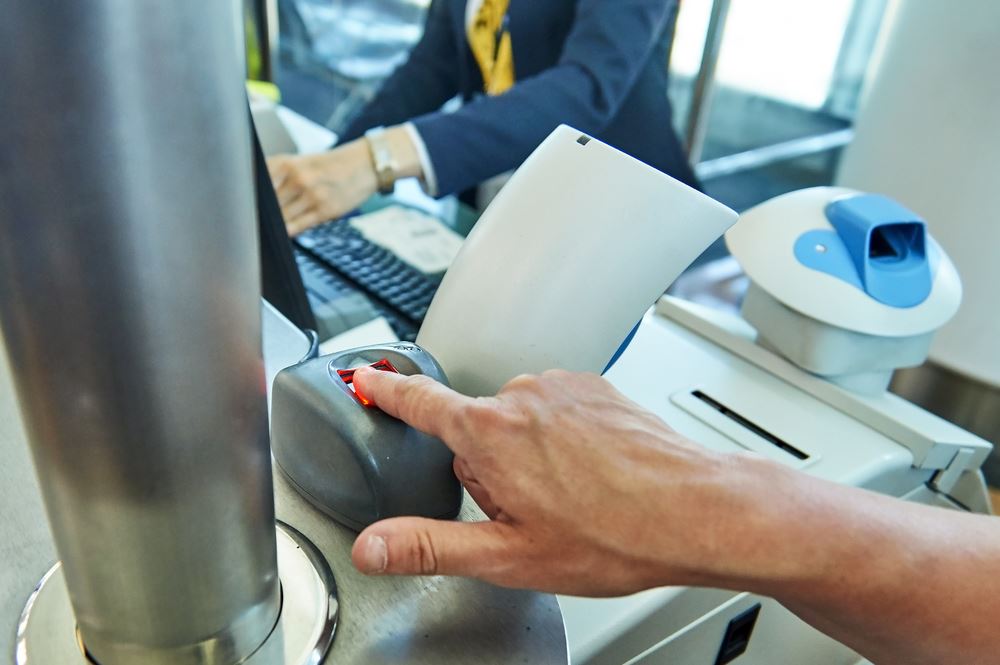
If you arrive at a border crossing point for the first time since the EES started, you will have to provide your personal data. Passport control officers will scan your fingerprints or take a photo of your face. This information will be recorded in a digital file. Your passport (biometric or non-biometric) will not be stamped.
If you have crossed the borders of the European countries using the EES more than once since the EES started, your fingerprints or the photo of your face will already be recorded in the EES. The passport control officers will only verify your fingerprints and photo, which will take less time. In rare cases, it may be necessary to collect and record your data again.
If you hold a biometric passport, you will be able to enter more quickly using the self-service system (if available at that border crossing point). If your digital file is clear of any impediments to travel, you will usually not need to go via a passport control officer.
This process can be quicker if you register some of your data in advance. You can do this by using:
- the dedicated equipment (“self-service system”), if available at your border crossing point; and/or
- a mobile application – if made available by the country of arrival or departure
In any of the instances above, you will meet a passport control officer.
Application process: Travelers can apply for the EES and ETIAS online, with a decision typically given within minutes or as long as 72 hours for the ETA. The ETIAS comes with a fee of €7 (roughly US $7.40 or £5.80).

FAQ
* Is it possible to apply without confirmed travel plans?
When you apply for an ETIAS travel authorization, you are required to indicate the first country you intend to stay in. This information is used to process your application. However, once you have your travel authorization in hand, you can change your plans and travel to any of these 30 European countries.
* How long does it take?
Filling out the application is quick and easy. Most applicants will receive their ETIAS travel authorization within minutes, but in some cases the process may take up to 30 days. This is why you should apply well in advance of your travel to avoid complications.
* Will I be notified of the outcome of my application?
Yes, you will receive an email once your application is processed
* What should I pay particular attention to when filling in my application?
You should make sure to avoid common mistakes such as using the number ‘0’ instead of the letter ‘O’ or vice-versa when filling in your travel document number. Paying particular attention to such details is very important, as the ETIAS travel authorization is linked to your travel document number: if the numbers do not match, you will be refused boarding and entry at the border.
Also, make sure you provide an email address that you personally have access to. This email address will be used for all communication related to your travel authorization.
* Can I save my draft application and continue later?
Yes. The system allows you to start an application and come back to complete it later. Your draft application will be stored for 48 hours. After that it will be deleted automatically, and you will have to start a new application.
* I see there are other websites that also offer the possibility to apply for an ETIAS travel authorization. Is it safe to use any of them?
This is the only official website of the European Union that allows you to submit applications for ETIAS travel authorizations directly – https://travel-europe.europa.eu/index_en
* I have changed my passport – do I need to apply for a new ETIAS travel authorization?
An ETIAS travel authorization is linked to the travel document. You need to apply for a new ETIAS travel authorization if you changed your travel document for any reason.
* I have multiple nationalities and one of them is a European country requiring ETIAS – do I need to apply for an ETIAS travel authorization?
No, if you have a travel document issued by any of the European countries requiring ETIAS or Ireland, you do not need a travel authorization to enter the territory of any of them. Make sure that you use that travel document during your trip.
* I am a British national – do I need an ETIAS?
Yes. UK nationals, including British overseas citizens (BOC), British protected persons (BPP), British subjects (BS), are required to have a valid ETIAS travel authorization to travel to any of the 30 European countries requiring ETIAS for a short stay unless they are beneficiaries of the withdrawal agreement
* Do I need an ETIAS travel authorization if I am only transiting through a European airport?
No, you do not need an ETIAS travel authorization if you only remain in the international transit area. However, you must have a valid travel authorization if you leave this area and enter the territory of any of the European countries requiring ETIAS.
* Should I print out my ETIAS travel authorization?
You don’t need to, as the check-in staff of the carrier and border guards can access your travel authorization in the system. You may however carry a printout for your own convenience.
* Does my ETIAS travel authorization guarantee my admission to the territory of the European countries requiring ETIAS?
No. While a valid ETIAS travel authorization allows you to board your flight, bus or ferry to any of the countries requiring ETIAS, the ultimate decision always lies with the border guards at the border crossing point, who may refuse entry to travellers, based on national laws or security concerns. A border guard may also ask you to provide additional documents to check if the conditions of entry are met. If you receive a decision that your ETIAS application was refused, it will include the reasons for the refusal. It will also provide information about the procedure you should follow if you wish to appeal.
* I am applying for an ETIAS travel authorization and my passport expires in two years. How long will my travel authorization be valid for?
Your travel authorization will be valid for three years or until the end of validity of your travel document – whichever comes first. If your passport is valid for two years, your ETIAS will also be valid for two years.
* How do I renew my ETIAS travel authorization?
You will receive an email regarding the upcoming expiration of your ETIAS travel authorization. You will be able to apply for a new authorization 120 days before the expiry of your current travel authorization.
* Which data are collected by the EES?
You need to provide your personal data each time you reach the external borders of the European countries using the EES.
The EES collects, records and stores:
- data listed in your travel document(s) (e.g. full name, date of birth, etc.)
- date and place of each entry and exit
- facial image and fingerprints (called ‘biometric data’)
- whether you were refused entry.
- On the basis of the collected biometric data, biometric templates will be created and stored in the shared Biometric Matching Service (see footnote).
If you hold a short-stay visa to enter the Schengen area, your fingerprints will already be stored in the Visa Information System (VIS) and will not be stored again in the EES.
* How will you be informed about the processing of your personal data?
You will be provided with written information about the EES and your related rights when you cross the external borders of the European countries implementing the EES for a short stay (maximum of 90 days in any 180-day period).
* What happens if you refuse to have your fingerprints scanned or a photo of your face taken?
If you refuse to provide your biometric data, you will be denied entry into the territory of the European countries using the EES.
* Who can access your personal data?
Authorities in European countries using the EES such as border, visa and immigration authorities for the purpose of verifying your identity and understanding whether you should be allowed to enter or stay on the territory.
- Europol may also access your data for law enforcement purposes.
- Under strict conditions, your data may be transferred to another country (inside or outside the EU) or international organization (listed in Annex I of Regulation (EU) 2017/2226 – a UN organisation, the International Organisation for Migration, or the International Committee of the Red Cross) for return (Article 41(1) and (2), and Article 42) and/or law enforcement purposes (Article 41(6)).
- Transport carriers will only be able to verify whether short-stay visa holders have already used the number of entries authorized by their visa and will not be able to access any further personal data.
* How long does the EES keep your personal data?
Your data will only be kept in the system for the purposes for which it was collected and for the specific durations outlined below.
- Records of entries, exits and refusals of entry – 3 years. Starting on the date on which they were created
- Individual files containing personal data – 3 years and 1 day. Starting on the date of your last exit or of your refusal of entry (if you were not permitted to enter)
- If no exit has been recorded – 5 years. Starting on the expiry date of your authorized stay.
‘OVERSTAYER’
How to check your remaining days in the European countries using the EES and what happens if you overstay?
You have the right to receive information from passport control officers on the maximum remaining duration of your authorized stay. You can also consult the online tool or via the equipment installed at some border crossing points.
If you stay longer than permitted, you will be identified as an ‘overstayer’ and your data will automatically be added to a list. Authorities such as passport control officers, immigration officers and staff issuing visas have access to this list. If you are added to the list of overstayers, other consequences can apply depending on national legislation in place in the respective European country using the EES (e.g. you may be removed from the territory; you may be subject to administrative fines or detention; you may be prevented from re-entering the EU in the future.)
If, as an overstayer, you provide credible evidence to the competent authorities, such as border authorities or immigration authorities, that you exceeded the authorized duration due to unforeseeable or mitigating circumstances (e.g. hospitalization due to a serious injury), your data can be amended in the system and you can be removed from the list.
The calculation of the duration of the authorized stay and the generation of alerts to European countries using the EES when the authorized stay has expired do not apply to non-EU nationals who are family members of EU, EEA or Swiss nationals who travel to a state other than the state of their nationality, or already reside there, and are accompanying or joining the EU, EEA or Swiss national.
More Information:
Electronic Entry/Exit system
The EES does not apply to:
– Nationals of the European countries using the EES, as well as Cyprus and Ireland
– Non-EU nationals who hold a residence card and are immediately related to an EU national
– Non-EU nationals who hold a residence card or a residence permit and are immediately related to a non-EU national who can travel throughout Europe like an EU citizen
– Non-EU nationals travelling to Europe as part of an intra-corporate transfer or for the purposes of research, studies, training, voluntary service, pupil exchange schemes or educational projects and au-pairing
– Holders of residence permits and long-stay visas
– Nationals of Andorra, Monaco and San Marino and holders of a passport issued by the Vatican City State or the Holy See
– People exempt from border checks or who have been granted certain privileges with respect to border checks (such as heads of state, cross-border workers, etc.)
– People not required to cross external borders solely at border crossing points and during fixed opening hours
– People holding a valid local border traffic permit
– Crew members of passenger and goods trains on international connecting journeys
– People holding a valid Facilitated Rail Transit Document or valid Facilitated Transit Document, provided they travel by train and do not disembark anywhere within the territory of an EU Member State.
https://travel-europe.europa.eu/ees/whom-does-ees-not-apply_en
Critics of the ETA scheme
Not everyone is happy about the increased digitization of the border entry process. Critics of the expanded ETA scheme are concerned about what happens in the event of a tech glitch – something that happens with increased frequency in the past couple of years. Others worry that as nations and regions continue to move towards online entry forms, they’ll no longer receive passport stamps, which have long been a sentimental place for some travellers.

“Passport stamps are a great way to document memories and look back at, but they’re also good for when processes and technology fails.” said Kita Jean, a frequent traveller and member of Nomadness Travel Tribe.
As more places continue to implement digital entry systems and yet more fees, only time will tell whether these new changes will actually help make crossing borders more efficient – or will travellers view them as inefficient and unnecessary additional hoops to jump through.
We think it’ll be the latter, but having said that – if you’ve been through YYZ any time in the past couple of years you’ve already experienced it and it does speed up immigration significantly – albeit after leaving your mugshot and fingerprints behind.
Copyright © 2025 TravelBloggers.ca / Iain & Gail Shankland.
All rights reserved. Text: Iain Shankland |
Be sure to give us a like on Facebook or follow us on Twitter
…or sign up for our blog via email so you don’t miss future articles!
Facebook: @Travelbloggers.ca
Twitter: @TravelBloggerz
YouTube: youtube.com/@TravelBloggers/videos
About TravelBloggers…
Iain & Gail started blogging in order to inspire and motivate people to travel the world from their perspective – specializing in having the most fun while using the least amount of money…travelling on the cheap without sacrificing comfort.
** In the end you will only regret the things you didn’t do **
Discover more from TravelBloggers.ca
Subscribe to get the latest posts sent to your email.
 TravelBloggers.ca